

Vinyl fencing has earned a reputation as a low-maintenance, long-lasting option for Colorado homes. But as temperatures drop each fall, one question comes up again and again: will a vinyl fence crack in the cold? It is a fair concern. Our winters bring hard freezes, sudden temperature swings, heavy snow, and the occasional hailstorm, all of which test any fence material. If you already own a vinyl fence or are thinking about adding one, it helps to know what is a real risk and what is a myth.
In this guide, we explain how cold weather actually affects vinyl, what really causes winter cracks, how material quality plays a role, and what you can do to keep your vinyl fence in great shape until spring.
The Short Answer: Cold Makes Vinyl Less Forgiving, Not Fragile
A well-made, properly installed vinyl fence does not crack simply because the temperature drops. Plenty of vinyl fences across the Denver metro make it through decades of winters without a single split. What cold weather does change is how vinyl responds to stress.
Here is what to know:
- Vinyl gets stiffer in the cold. PVC loses some of its flexibility as it freezes, so it absorbs sudden impacts less easily than it does in summer.
- Most winter cracks start with an impact. A thrown snowball with ice in it, a snowblower kicking up debris, a falling icicle, or a ladder bumping a panel is far more likely to cause a crack than cold alone.
- Installation matters. Vinyl expands and contracts with temperature, and panels installed without room to move are more likely to stress and split.
- Quality matters too. Thicker profiles and better formulations handle cold far better than thin, low-grade vinyl.
- Age plays a role. Older vinyl that has spent many years in strong sun can become more brittle than new material, so a fence that handled past winters with ease may need a little more care as it ages.
In other words, cold weather lowers the margin for error. With the right product and a bit of seasonal care, a vinyl fence handles Colorado winters well. If you are still weighing materials, our article on the top reasons to use a vinyl fence covers the broader picture.
What Actually Happens to Vinyl Fencing During a Colorado Freeze
Vinyl fencing is made from PVC, a material that changes behavior with temperature. In warm weather, it has enough flex to bend slightly and bounce back when something bumps it. As temperatures fall below freezing, the material stiffens. It is still strong, but it becomes less able to absorb a sharp, sudden blow. That is why the same tap that does nothing in July can leave a crack in January.
Temperature swings add another layer. Vinyl expands as it warms and contracts as it cools. In Colorado, that cycle can be dramatic. It is common for a winter day to start in the single digits, climb into the 40s or 50s under strong sun, and drop again after dark. Each swing causes rails, pickets, and panels to move slightly within their posts and brackets. When a fence is installed with proper spacing, that movement is absorbed without a problem. When parts are locked too tightly, stress builds up at joints and fastener points.
High-altitude sun also plays a role. Colorado’s intense UV exposure can slowly affect vinyl that lacks quality UV inhibitors, making older or lower-grade material more prone to brittleness over time. A fence that has spent many years baking in strong sun may handle cold impacts less well than it did when it was new.
None of this means vinyl is a poor choice for our climate. It simply means installation quality, product quality, and a little winter awareness go a long way. Our vinyl fence installation work accounts for these seasonal movements from the start.
The Most Common Causes of Winter Cracks in Vinyl Fences
When we look at a cracked vinyl fence after a cold snap, the cause usually falls into one of a few categories. Knowing them makes it easier to prevent damage before it happens.
Impacts From Snow Removal and Play
Snowblowers can throw ice chunks and gravel at high speed, and metal shovels can strike the bottom rail while clearing a path. Kids playing, snowballs packed with ice, and tools leaned against the fence add up as well. In cold weather, these everyday impacts are the leading cause of cracks. Areas near driveways, walkways, and play spaces tend to take the most hits, so they are worth checking first after a storm.
Heavy Snow and Ice Loads
Wet spring snow and drifts piled against a fence put sustained pressure on panels and rails. Snow plowed or shoveled against the fence line makes it worse. Icicles falling from rooflines onto nearby fence sections can also crack top rails. Gates are especially vulnerable, since snow buildup against a gate adds weight and makes people more likely to force it open.
Hail
Colorado hail can damage nearly any fence material, and vinyl is no exception, especially on cooler days. If a storm rolls through, our guide on steps to take when bad weather causes fence damage walks through what to check.
Tight Installation and Post Movement
Panels without room to expand and contract can split at joints. Posts that shift from frost heave can also twist rails out of alignment, putting stress on brackets and connections. This type of damage often appears gradually, starting as a slight gap or bowed rail before a visible crack forms.
How Material Quality Affects Vinyl Fence Performance in Cold Weather
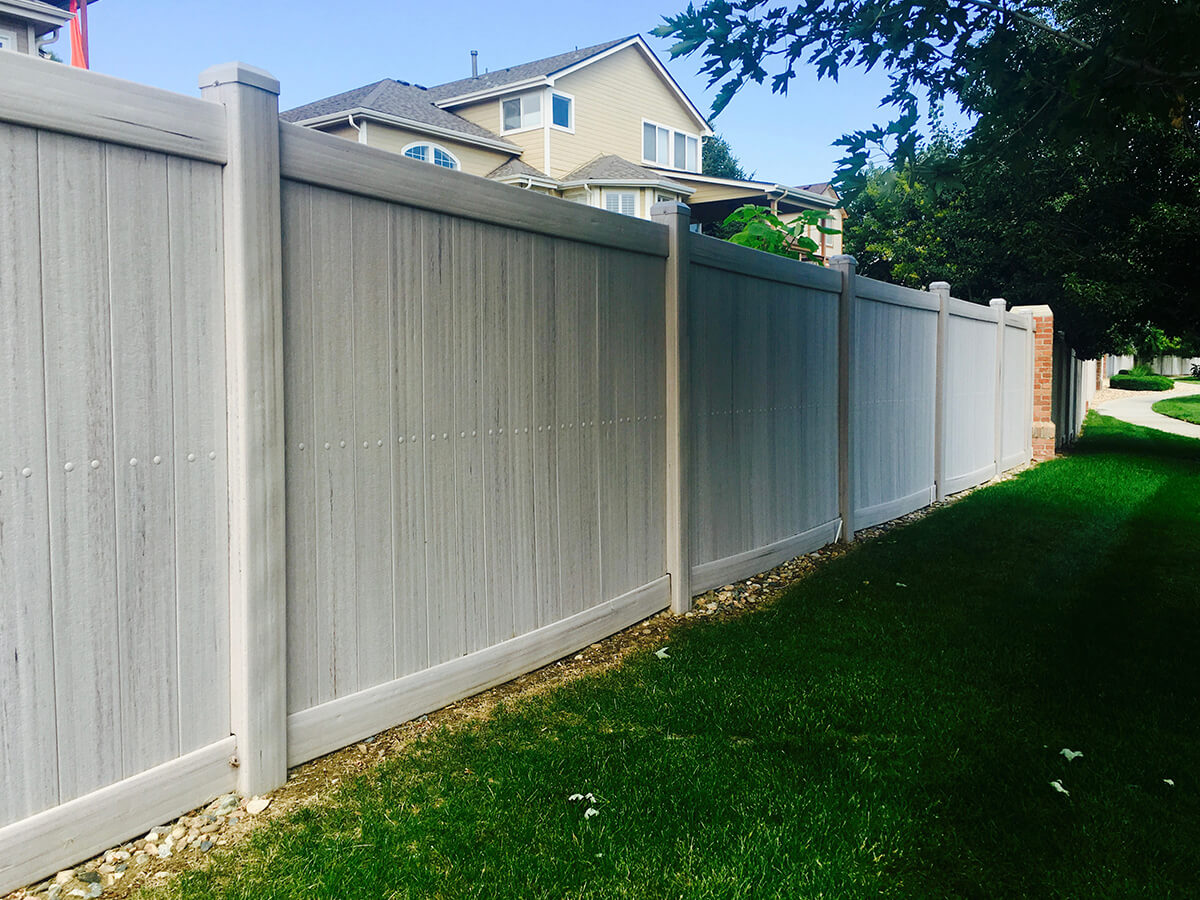 Not all vinyl fencing is created equal, and the differences show up most clearly in winter. Two fences can look nearly identical when new, yet perform very differently after a few Colorado seasons.
Wall thickness is one of the biggest factors. Thicker vinyl profiles are more rigid and better at resisting impacts, while thin, lightweight material is more likely to crack when struck in cold weather. Formulation matters as well. Quality vinyl fencing includes impact modifiers that help the material stay tougher at lower temperatures, along with UV inhibitors that protect it from sun damage over the years. Because the color in vinyl is part of the material itself rather than a surface coating, a quality product keeps its look without painting, but it still depends on a good formula to hold up physically.
Design also plays a part. Reinforced rails, especially bottom rails on longer spans, help panels resist sagging and flexing under snow loads. Properly sized posts and secure brackets keep the whole system working together as temperatures change. Gates benefit from internal reinforcement, since they see more movement and stress than fixed panels.
When you compare options, ask about profile thickness, reinforcement, and warranty coverage rather than looking at appearance alone. With the right product, vinyl fences offer an average lifespan of around 30 years with proper care. If you are still deciding between materials, our comparison of wood and vinyl fencing for Denver homes can help you weigh the tradeoffs. You can also browse vinyl fence styles to see how different designs look.
Repairing a Cracked Vinyl Fence: What You Can Fix and What Needs a Pro
If you do find a crack, the good news is that vinyl fences are often easy to repair. The right approach depends on the size and location of the damage.
Small Hairline Cracks
Minor cracks in a picket or panel can sometimes be stabilized with a vinyl repair kit or a suitable adhesive filler. This is usually a temporary fix that keeps the crack from spreading and keeps moisture out until a permanent repair is possible. Wait for a mild, dry day, since most repair products work best above freezing.
Cracked Pickets, Rails, or Panels
One of the advantages of vinyl is that individual components can often be replaced without rebuilding the whole fence. A cracked rail or picket can typically be swapped for a matching piece, provided the color and profile are still available. Matching is easier when you know the original product line, so it helps to keep any paperwork from your installation. Replacing a damaged piece promptly also keeps the rest of the section from carrying extra stress.
Damaged Posts or Leaning Sections
If a crack comes with a leaning post, a sagging gate, or panels pulling out of their brackets, the problem likely goes beyond the surface. Shifting posts usually need to be reset, and that is a job for a professional. Our fence and gate repair team can assess the damage and recommend whether a targeted repair or section replacement makes more sense.
Addressing cracks early prevents water from getting inside, freezing, and making the damage worse.
Winter Care Checklist for Vinyl Fences in the Denver Metro
A few simple habits help your vinyl fence get through the cold months without damage. Whether you live in Westminster, Aurora, or anywhere else along the Front Range, these steps make a real difference:
- Point snowblower chutes away from the fence and keep shovels off the bottom rail.
- Avoid piling or plowing snow against fence panels.
- Gently brush heavy snow off gates and long spans after big storms.
- Knock down large icicles hanging over fence sections.
- Keep ladders, tools, and toys from leaning against the fence.
- Check posts and gates for movement after freeze-thaw swings.
- Inspect for cracks after hailstorms and repair them before moisture gets in.
- Power wash the fence once a year in warm weather to keep it clean.
For more ways to prepare your property for the season, see our guide to winter-proofing your fence.
Get Expert Help With Your Vinyl Fence
Vinyl fencing is a smart, durable choice for Colorado homes when it is built from quality materials and installed with our climate in mind. Whether you are planning a new vinyl fence, dealing with winter damage, or wondering if your current fence will hold up, our team is here to help. We look at your property, your goals, and the conditions your fence will face so you get a result that lasts.
Many homeowners are surprised to learn that winter can be a good time to install a fence. When you are ready to talk through your project, Get a Free Estimate and let us help you choose a fence built to handle every Colorado season.
Need an expert opinion? Talk to our experts today!
When you talk to our experts at Denco Fence Company, we’ll help you compare fence styles, share design ideas, and answer any questions along the way. If you’re looking to build or repair a fence that you and your neighbors are going to love, get a free estimate and let us help bring your project to life.