
Wood and vinyl are two of the most popular fencing choices for Denver area homeowners, and both can look great and hold up well when installed correctly. The right choice usually comes down to a few practical tradeoffs rather than one material being universally better than the other, so it helps to compare them across the factors that actually affect your day-to-day experience with the fence.
Both materials show up constantly in questions we get from homeowners who are comparing options before requesting an estimate. Here is how wood and vinyl privacy fencing compare when it comes to cost, maintenance, durability, and style, so you can figure out which one fits your property and priorities.
Upfront and Long-Term Cost
Wood fencing typically has a lower upfront material cost than vinyl, which makes it an appealing option if you are working with a tighter initial budget. Vinyl usually costs more to install, but that higher upfront price is offset over time by the fact that it does not require the periodic staining or sealing that wood needs to stay protected. Over a ten or fifteen year period, those maintenance costs for a wood fence can add up to a meaningful amount, especially if you are paying for professional staining rather than doing it yourself.
When you look at total cost over the life of the fence rather than just the installation price, the gap between wood and vinyl often narrows considerably. If your budget is more focused on keeping upfront costs low, wood tends to be the more approachable option, while vinyl can make more financial sense if you are planning to stay in your home long enough to benefit from lower ongoing maintenance. Homeowners planning a shorter-term stay sometimes lean toward wood for this reason, since they will not be around long enough to see vinyl’s maintenance savings pay off, while those planning to stay for many years often find vinyl’s higher upfront cost easier to justify.
Maintenance in Colorado’s Climate
This is where the two materials differ the most. Wood fencing needs regular attention to hold up against Colorado’s intense UV exposure and freeze thaw cycles, typically including a fresh coat of stain or sealant every two to three years. Skipping this maintenance can lead to fading, cracking, and a shorter overall lifespan, especially on fence sections that get the most direct sun exposure throughout the day. Boards facing south or west tend to fade and dry out faster than shaded sections, which can create an uneven appearance if maintenance is inconsistent.
Vinyl, by comparison, does not need staining, sealing, or painting at all. Occasional cleaning with soap and water is usually enough to keep it looking good, and it is far more resistant to the kind of sun fading that wood experiences at higher elevations. For homeowners who would rather spend a weekend doing something other than fence maintenance, this is often the deciding factor, and it is one of the most common reasons people switch from a wood fence to vinyl when it comes time to replace an aging fence.
Durability and Weather Resistance
Both materials can perform well in Colorado’s climate when installed properly, but they respond to weather stress in different ways. Wood is prone to warping, splitting, or developing gaps between boards as it expands and contracts with temperature swings, particularly if the wood was not properly treated or maintained. Cedar tends to perform better than softer woods because of its natural resistance to rot and insects, but it is still a natural material that responds to moisture and sun exposure over time. Even well-maintained cedar will show some natural graying or texture change over the years, which some homeowners appreciate for the character it adds and others prefer to prevent with regular staining.
Vinyl does not absorb moisture the way wood does, so it is far less prone to warping, rotting, or insect damage. It can become brittle in extreme cold if it is a lower-grade product, so material quality matters more with vinyl than it might seem at first. A well-made vinyl fence generally holds its shape and color for many years with minimal wear, and it tends to be less affected by the kind of freeze thaw cycling that gradually loosens wood fasteners over time. This is one reason vinyl has become a popular replacement choice for homeowners who are tired of dealing with a warped or splitting wood fence.
Style and Curb Appeal
Wood offers a natural, classic look that many homeowners prefer, especially for properties with a more traditional or rustic style. It can also be stained in different shades to match your home’s exterior, giving you more flexibility to change its appearance over time if your preferences change or if you update your home’s color scheme down the road.
Vinyl comes in a range of colors and styles as well, including options designed to mimic the look of wood grain, but the color and texture are fixed once installed rather than adjustable through staining. Vinyl tends to look more uniform and polished over time, since it does not weather or fade the way natural wood does, which some homeowners prefer for a cleaner, more consistent appearance. If a slightly more modern or manicured look is what you are going for, vinyl often achieves that more easily than natural wood, though plenty of homeowners still prefer the texture and warmth that only natural wood provides.
Repairs and Long-Term Upkeep
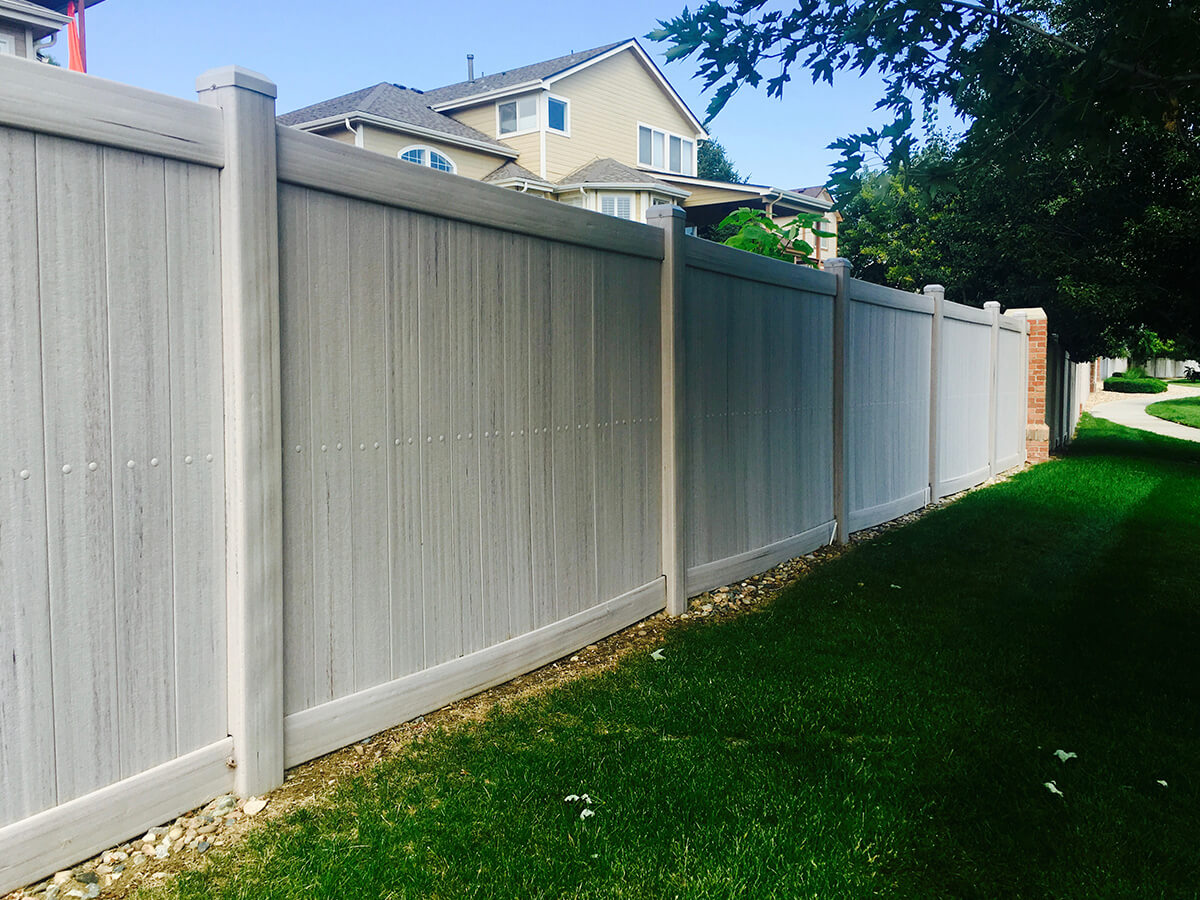
Wood fencing is generally easier and less expensive to repair in small sections, since a damaged board can often be replaced individually without affecting the rest of the fence, and matching a new board to weathered wood is usually a minor cosmetic difference rather than a major mismatch. Vinyl repairs can be more involved, since matching an exact panel or color from a different manufacturing batch is not always possible, which sometimes means replacing a larger section than the actual damage requires.
On the other hand, vinyl is less likely to need repairs in the first place, since it does not experience the same wear from moisture, insects, or UV exposure that eventually catches up with even well-maintained wood fencing. Over a long enough timeline, many homeowners find that vinyl’s lower repair frequency offsets the occasionally higher cost of an individual repair when one is needed. If your current fence is already showing signs of wear, our fence and gate repair page covers what we typically look for during a repair assessment.
How Installation Timelines Compare
Installation time for both materials depends more on the length and layout of your fence line than on the material itself, but there are some differences worth knowing. Wood installation involves individually placing and fastening boards, which can take slightly longer for detailed styles or custom heights, especially on fence lines with a lot of corners or gates. Vinyl often comes in pre-assembled panel sections, which can sometimes speed up installation on more straightforward, level yards, though custom heights or colors may require additional lead time to order material.
Site conditions like slopes, existing landscaping, or the need to remove an old fence tend to have a bigger impact on your project timeline than the choice between wood and vinyl. Your project manager can give you a more specific timeline estimate once they have seen your property in person and discussed your preferred style.
Frequently Asked Questions
Does vinyl fencing crack in cold weather?
Lower-quality vinyl can become more brittle in very cold temperatures, which is why material quality matters. A well-made vinyl fence is formulated to handle temperature swings without becoming overly brittle or prone to cracking.
Can I paint a vinyl fence if I want to change its color later?
Vinyl is not designed to hold paint well over time, so most homeowners who want the flexibility to change color down the road tend to lean toward wood, which can be restained or repainted more easily.
Which option adds more value if I plan to sell my home?
Both materials can be attractive to buyers, and the better choice often depends on what is already common in your neighborhood. A well-maintained fence in either material tends to be viewed positively, while a neglected fence in either material can detract from curb appeal.
Is one material better suited to homes with pets?
Both wood and vinyl privacy fencing offer solid, gap-free coverage that works well for containing pets. Vinyl tends to hold up slightly better against pets that scratch or chew at a fence line, since it does not splinter the way wood can over time, but either material can work well with the right height and installation for your specific pet.
Which One Is Right for You?
A few questions can help you land on the better fit for your property, since the right answer really does depend on your specific priorities rather than one material being objectively better:
- Do you want the lowest possible upfront cost, or the lowest long-term maintenance?
- Are you comfortable staining a fence every few years, or would you rather skip that task entirely?
- Do you prefer the natural, classic look of wood, or a more uniform, low-maintenance appearance?
- How long do you plan to stay in your home, since that affects how much long-term maintenance savings actually matter?
If you are still weighing your options, our cedar wood fence installation and vinyl fence installation pages both go into more detail on styles and what is included with each option, and browsing a few fence style ideas can help you visualize how each material might look on your property before you commit to one direction.
Get a Free Estimate for Your Denver Home
Both wood and vinyl can be excellent choices depending on your priorities, your budget, and how much ongoing maintenance you want to take on. Homeowners throughout Lakewood and the rest of the Denver metro area often find it helpful to see both materials in person and talk through the tradeoffs before making a final decision, rather than deciding based on photos alone.
Ready to compare your options in person? Get a free estimate and we will help you decide which material makes the most sense for your home, your budget, and how you plan to use your yard.
Need an expert opinion? Talk to our experts today!
When you talk to our experts at Denco Fence Company, we’ll help you compare fence styles, share design ideas, and answer any questions along the way. If you’re looking to build or repair a fence that you and your neighbors are going to love, get a free estimate and let us help bring your project to life.