
Ask ten people how deep a fence post should go and you will probably hear ten different answers. In Colorado, that question matters more than it does in most places. Our winters bring repeated freeze-thaw cycles, much of the Front Range sits on expansive clay soil, and strong winds put real pressure on every panel. A post that would hold for decades in a mild climate can start leaning after just a few seasons here.
In this guide, we explain how deep fence posts should be in Colorado, why frost heave is the biggest threat to a shallow post, and how soil, fence height, and anchoring method all change the right answer for your yard.
The Short Answer on Fence Post Depth for Colorado Yards
For a standard residential fence along the Front Range, a common target is to set posts about 3 feet deep, with gate and corner posts often going deeper. That number is not arbitrary. Building codes across much of Colorado use a frost depth of roughly 36 inches for structural footings, and getting the base of a post at or near that depth helps protect it from the ground movement that winter brings.
A few general rules of thumb help put that number in context:
- Bury at least one-third of the post. A widely used guideline is to place about a third of the post’s total length below grade. For a 6-foot privacy fence, that typically means an 8 to 9-foot post with roughly 2.5 to 3 feet in the ground.
- Go deeper for gates and corners. These posts carry swinging weight and tension from two directions, so they benefit from extra depth and a wider footing.
- Taller fences need deeper posts. More height means more leverage working against the base every time the wind blows.
- Local rules come first. Some cities and HOAs have their own requirements for fence footings, height, and setbacks, so it pays to confirm before digging.
If you are not sure what each part of a fence does, our breakdown of fence anatomy from pickets to posts is a helpful starting point. Every fence we build through our wood fence installation service starts with a post plan matched to the site.
Why Frost Heave Pushes Fence Posts Out of the Ground on the Front Range
Frost heave is the main reason post depth gets so much attention in Colorado. When water in the soil freezes, it expands. That expansion pushes upward on anything sitting in the frozen layer, including the bottom and sides of a fence post. When the ground thaws, the soil settles back down, but the post does not always settle with it. Over many cycles, a shallow post can creep upward a little at a time until it leans, lifts, or pulls a whole section out of line.
What makes the Denver metro especially tough is how often this happens. Rather than freezing once in December and staying frozen until spring, our ground can freeze and thaw dozens of times in a single winter. A sunny 50-degree afternoon followed by a single-digit night is a normal week here. Each swing gives frost another chance to grab the post and lift it.
When the base of a post sits below the depth where the ground typically freezes, the frozen layer has less to grip from underneath. The post is anchored in soil that stays more stable through the season, so it is far less likely to jack upward. Shape matters too. A post hole that is wider at the top than the bottom, or a concrete footing with a mushroom-shaped crown below grade, gives frozen soil a ledge to push against. Straight or slightly flared-at-the-bottom holes resist that lifting force much better.
If you already have posts that rise each spring, it is usually a sign they were set too shallow or in a footing shape that invites heave. Our fence and gate repair team can reset problem posts without replacing the entire fence.
Setting Fence Posts in Colorado’s Expansive Clay Soil
Depth is only half the story. The soil around the post plays a major role in how well it holds over time. Many neighborhoods across the metro, from Lakewood to Aurora, sit on clay that swells when wet and shrinks when dry. That constant movement can loosen posts even when frost is not a factor.
Hole Shape and Width
A post hole in clay should be wide enough to allow a solid collar of concrete or compacted fill around the post, usually about three times the post’s width. Keeping the sides straight, or slightly wider at the bottom, helps the footing lock into the soil instead of riding up with it.
Drainage at the Base
Clay holds water, and standing water at the bottom of a hole is a recipe for both heave and rot. Adding a few inches of gravel at the base gives water somewhere to go. This is especially important for wood posts, since moisture trapped against the end grain is one of the top causes of fence rot.
Finishing at Grade
Where the post meets the ground is its most vulnerable point. Sloping the top of the concrete away from the post sheds water instead of pooling it. Backfilling with soil over the concrete can look tidy, but it can also hold moisture right where wood is most likely to break down. Leaving the crown just above grade and keeping mulch or rock pulled back a few inches helps the base of each post dry out between storms, which adds years to the life of a wood fence.
How Fence Height, Wind, and Gates Change the Depth You Need
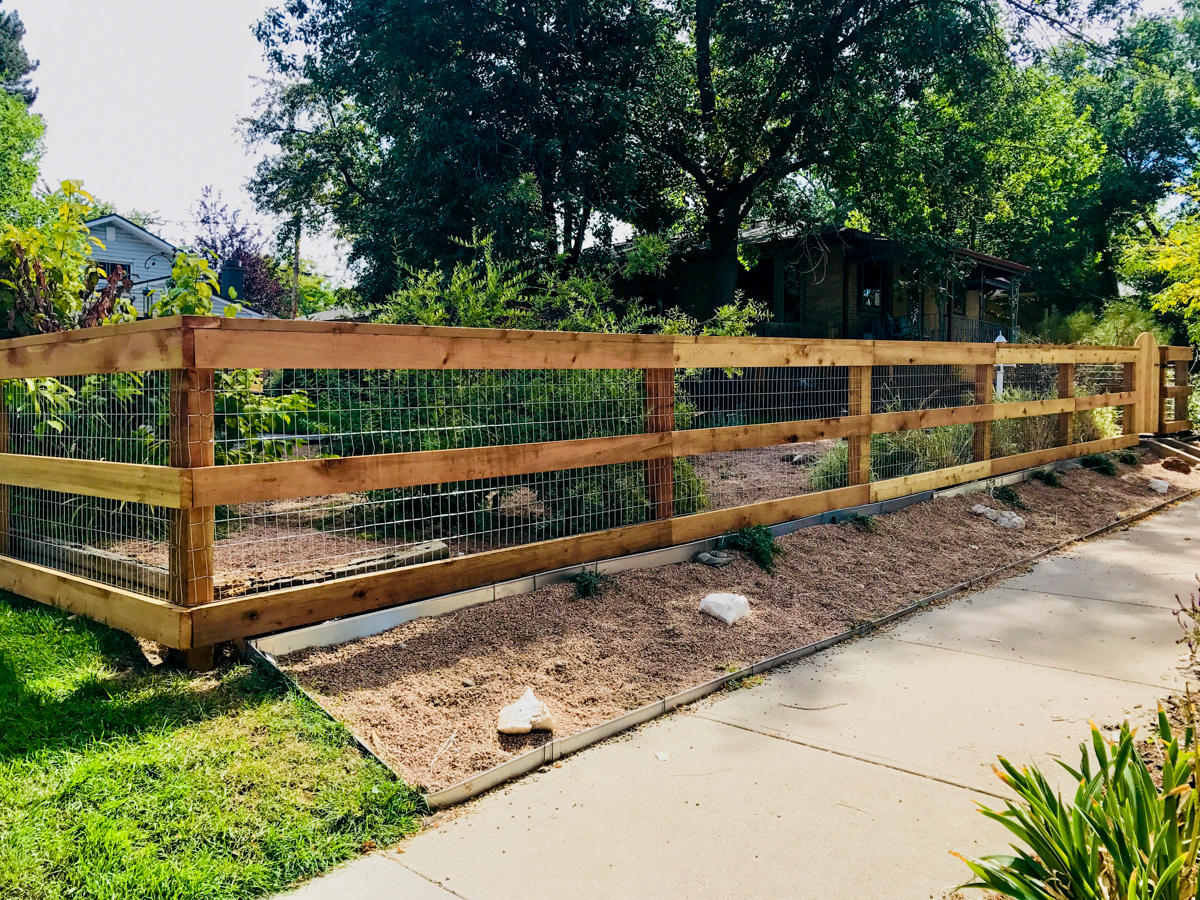 Every fence acts like a sail when the wind picks up, and Colorado gets plenty of wind. Strong gusts coming off the foothills and across the plains can push hard on a solid privacy fence. The taller and more solid the fence, the more force it catches, and nearly all of that force ends up at the base of each post. That is why a 6-foot board-on-board privacy fence needs more below-grade support than a 4-foot ranch rail fence that lets air pass through.
Fence style matters as much as height. Open designs like ranch rail, post and dowel, or picket fences allow wind to move through, so they put less strain on posts. Solid horizontal and vertical privacy styles block the wind entirely, which is great for privacy but demands stronger anchoring. If you are planning a solid fence in an open, exposed yard, it is worth discussing deeper posts or closer post spacing with your installer. Our guide to protecting your fence against Colorado’s unpredictable weather covers more ways to reduce wind stress.
Gates deserve their own attention. A gate post carries the full weight of the gate, plus the leverage created every time it swings open, slams shut, or gets pushed by a gust. Even a slight lean in a gate post can cause a gate to sag, drag, or stop latching. Setting gate posts deeper than line posts, using larger post sizes, and giving them a wider footing all help keep a gate working smoothly for years.
Finally, remember that permits and utility locates can affect where and how deep you dig. Before any project, we recommend checking local rules, such as those covered in our Denver fence permit guide, and calling 811 to have underground lines marked.
Concrete, Gravel, or Steel: Choosing How Posts Are Anchored
Once you know how deep your posts should go, the next decision is how to anchor them. Each method has tradeoffs, and the right choice depends on your soil, fence type, and long-term goals.
Concrete Footings
Concrete is the most common choice for residential fences in the Denver area. It provides a rigid base that resists both wind and lateral movement. To work well in our climate, the concrete should be shaped so it does not flare out near the surface, and the top should be crowned to shed water. When done right, concrete gives posts a strong, stable foundation.
Gravel and Compacted Fill
Some installers set posts in tamped gravel instead of concrete. Gravel drains well, which can reduce moisture around wood posts, and it makes future post replacement easier. The tradeoff is that gravel offers less resistance to strong lateral loads, so it is usually better suited to lighter or more open fence styles.
Steel Posts
Steel posts are another option for wood fences, especially in areas where rot is a concern. Some of our designs, such as The Alameda vertical privacy fence, are available with steel posts. Steel does not rot, but it still needs proper depth and footing to resist frost heave and wind, so the same depth principles apply.
Whichever method you choose, consistency matters. Posts set at the same depth, in the same type of footing, move together and keep the fence line straight. Mixing shallow and deep posts along one run is a common reason fences develop waves and dips over time.
Quick Checklist for Setting Fence Posts That Last in Colorado
Before posts go in the ground, run through these key points. They apply whether you are planning a new privacy fence in Littleton or replacing a tired ranch rail fence anywhere along the Front Range.
- Plan for posts about 3 feet deep for a standard residential fence, and deeper for gates and corners.
- Bury roughly one-third of each post’s total length below grade.
- Keep post holes straight or slightly wider at the bottom to resist frost heave.
- Add gravel at the base of each hole to improve drainage in clay soil.
- Crown concrete at the surface so water runs away from the post.
- Choose deeper posts or closer spacing for tall, solid fences in windy areas.
- Confirm permits, HOA rules, and utility locations before digging.
Getting these details right at the start is far easier and less expensive than resetting posts after a few hard winters.
Plan Your Fence With Denco Fence Company
Post depth is one of those details most homeowners never think about until a fence starts leaning. We take it seriously from the very first site visit, because the right foundation is what keeps a fence straight, sturdy, and good-looking through every Colorado season. Our team looks at your soil, fence style, height, and gate placement to build a post plan that fits your property.
If you want to see how a project comes together from start to finish, take a look at our process. When you are ready to talk through your fence, Get a Free Estimate and let us help you build a fence that stays solid for years to come.
Need an expert opinion? Talk to our experts today!
When you talk to our experts at Denco Fence Company, we’ll help you compare fence styles, share design ideas, and answer any questions along the way. If you’re looking to build or repair a fence that you and your neighbors are going to love, get a free estimate and let us help bring your project to life.